
Aristotle on the Characteristics of Tyrannical Leadership
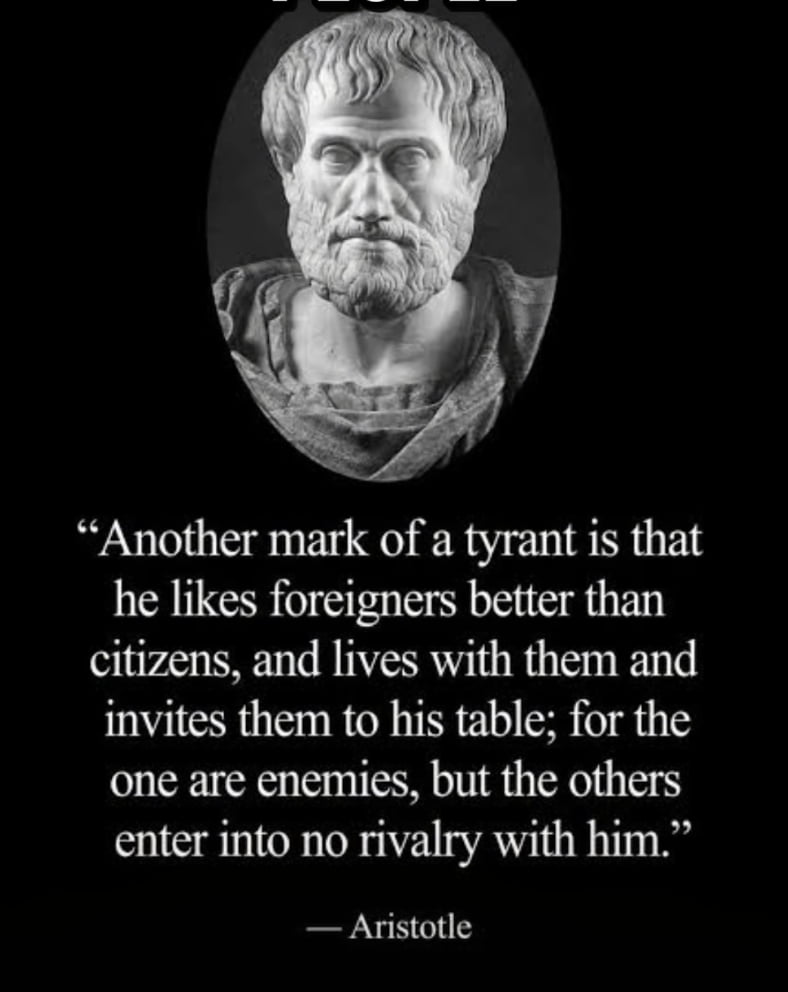
This image features a bust of the ancient Greek philosopher Aristotle paired with a quote attributed to him regarding the nature of tyranny. The text suggests that a tyrant prefers the company of foreigners over their own citizens, positing that citizens are viewed as potential rivals or enemies, while foreigners are perceived as non-threatening because they do not compete for power. The quote reflects Aristotle's political observations on how rulers maintain control by distancing themselves from the local population and relying on those who lack a vested interest in the state's internal political dynamics.



Yeah Greeks weren't fan boys of Xenocracy
Yup. Like late Roman Emperors did with Gypsy Germans.
How did Aristotle know about Putin?
fuck off with your bullshit, Aristotle did not speak english, it wasnt even invented
I'm fine with working against mass immigration. I don't think that's what Aristotle is talking about here. A tyrant sees the locals as potential enemies and rivals. It is safest to replace the local elite with one that owe their success to you. If you want your personal bodyguard
I didn’t know he knew Alice Weidel
Every US president since JFK
Like being friends with Putin, Kim or where does this go?
Ahh the liberal government of Canada comes to mind, more lenient sentences for crimes, legally allowed to carry a weapon because it's "their religious right". Elbows up eh eastern Canada!
In this passage, Aristotle explains that tyrants distrust their own free citizens—who possess civic rights, loyalty to the laws, and a spirit of freedom—and instead surround themselves with foreign companions or mercenaries who do not challenge their absolute power. Also; "Harshn