
Comparing the Grain Density of Modern and 1950s 2x4 Lumber
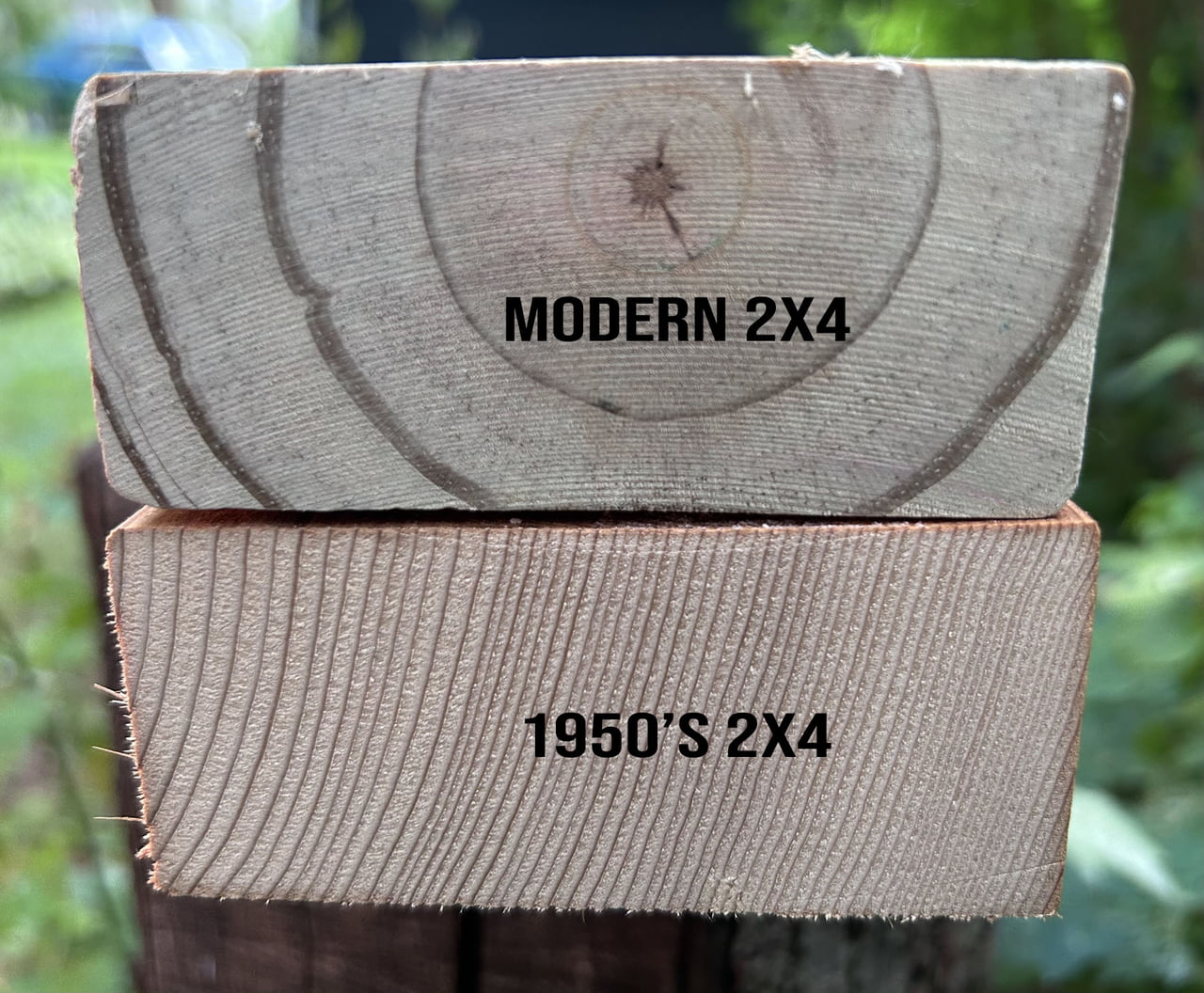
This visual comparison highlights the difference in growth ring density between a modern 2x4 and a 2x4 from the 1950s. The older piece of lumber displays a significantly tighter grain pattern, indicating a slower growth rate often associated with old-growth timber. In contrast, the modern board features wider spacing between the rings, which is characteristic of younger, faster-growing trees harvested for contemporary construction needs. The image serves as a point of discussion regarding changes in forestry practices, lumber quality, and the evolution of building materials over the last several decades.


Today’s lumber doesn’t even compare to old growth lumber
Younger tree. Only the number of rings itself is not very important.
Survivor bias. That's a 2x4 that survived 70 years. Of course it's high quality. If it wasn't, it wouldn't be here now.
That type of lumber still exists, its from older trees usually grown in 60-80 year lots. The wood above looks to be from younger trees probably 20-30 year lots with fast growing types, those are usually reserved for cheap construction or from DIY stores which usually try to sell
So? 2x4s aren't decorative theyre usually structural and hidden. We can now grow trees faster with less resources that produce a nearly identical product. Why are we complaining? Would you rather be able to cut down a tree every 5 years or every 100 years.
“A little learning is a dangerous thing.” Alexander Pope
Thats wrong because a modern 2x4 is actually 1.5x3.5 and those boards are the same size
You want renewable lumber? This is what renewable lumber looks like. All the old growth is either already harvested or legally protected. Can't have it both ways.
Top is most likely Radiata Pine, Southern US. The bottom is a fir , Douglas, maybe. Pacific Northwest. No easy comparison, all is based on price you are willing to pay, and its availability.
There’s nothing “modern” about it. Wood like the bottom one still exists. You just bought cost optimised material.